

16.09.2026
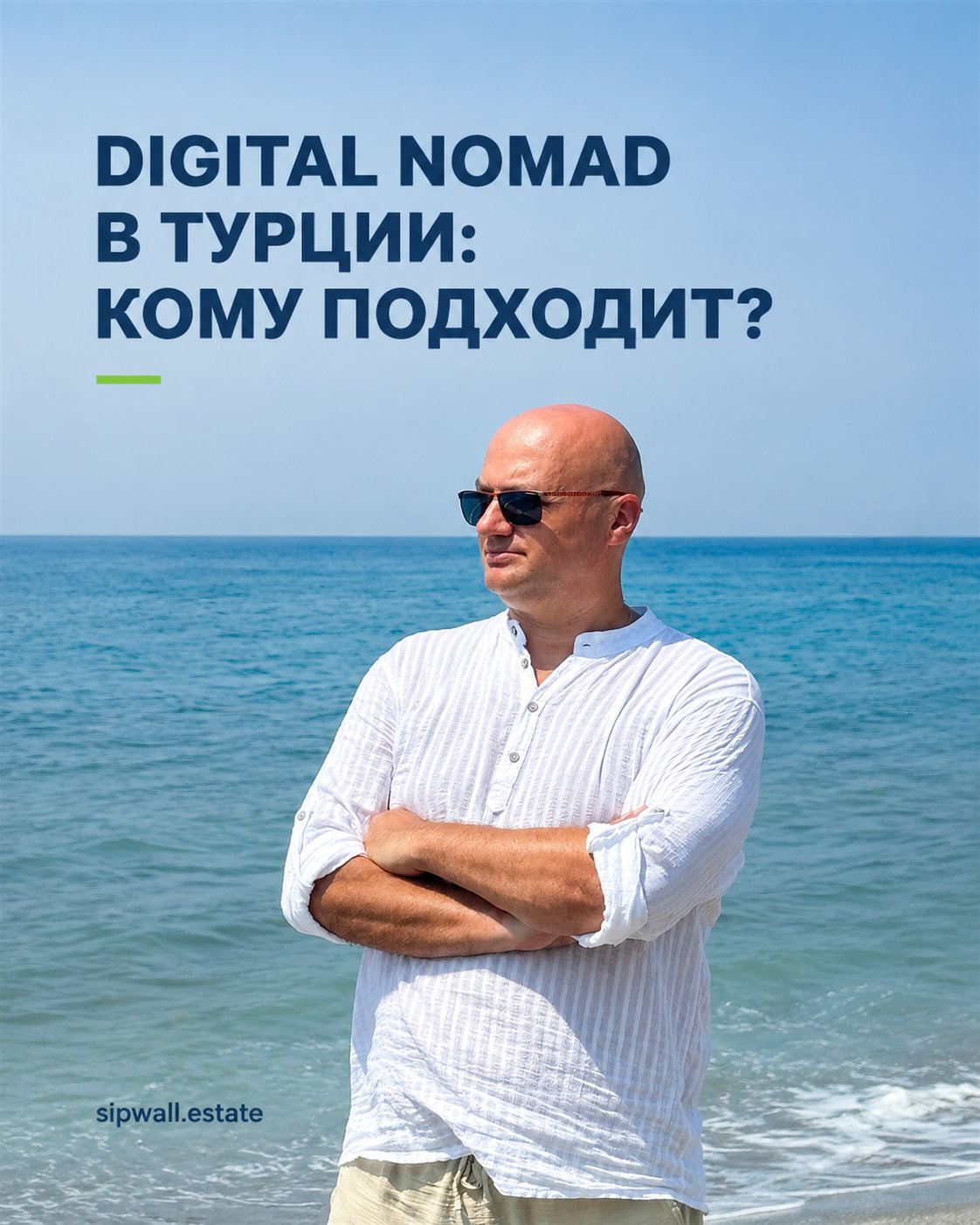
Digital Nomad in Turkey in 2026: Requirements, Visa and Housing
Life in Turkey

Search

A residence permit, TAPU or a registered company do not automatically give you the right to work in Turkey. We explain the employer's role, how to apply, company criteria and how it differs from Digital Nomad.

In short: if you intend to work for a Turkish company, a residence permit, TAPU, a registered company or Digital Nomad status is not enough on its own. You will usually need a work permit tied to a specific employer, workplace and type of activity. The application is completed by the Turkish employer, and the Ministry of Labour checks not only the foreign national's documents but also the company's staffing, financial and salary conditions.
"I live in Turkey legally, so I can work here" sounds logical, but legally these are two separate questions. A residence permit governs your stay. A work permit gives you the right to do specific work under defined conditions.
Below is a practical breakdown based on official materials from the Turkish Ministry of Labour and Social Security, checked on 23 August 2026.
This route is worth looking into if you plan to:
If you are still choosing a legal basis for living in the country, start with our map of four routes. It separates the tourist residence permit, Digital Nomad, working for a Turkish employer and the property-based residence permit.
The key difference is where the labour market is and who pays your income.
| Question | Digital Nomad | Work permit |
|---|---|---|
| Who the route is for | remote work for a company or client outside Turkey | work for a Turkish employer or lawful work in a local business |
| Key party | the applicant and their foreign source of income | the Turkish employer and the foreign employee |
| What is checked | citizenship, age, education, foreign employment and income | the contract, position, employee documents and employer criteria |
| Can you work for a Turkish company? | does not replace a work permit | yes, within the scope of the permit issued |
| Link to an employer | the route is built around foreign employment | a standard fixed-term permit is tied to a specific employer and job |
The detailed digital nomad criteria are covered in our article Digital Nomad in Turkey in 2026.
The Ministry of Labour's official FAQ defines the permit as a document that, for its period of validity, gives a foreign national the right to work and reside in Turkey. Most applicants do not need a separate residence permit for the same period. Exceptions apply to certain international and temporary protection statuses.
A standard fixed-term permit is not a universal pass to any employer. It is issued for a specific job, employer, workplace or related work sites in the same sector.
On a first successful application, the permit can be issued for a maximum of one year and no longer than the term of the employment or service contract. The first extension with the same employer can be granted for up to two years, and subsequent ones for up to three years. Moving to a different employer is assessed under the rules for a first application.
In standard employment, the procedure requires action from both parties, but the key electronic application is tied to the employer. You cannot simply "buy a work visa" on your own without a real employer and contract.
Typically required:
The exact set depends on the profession, sector, applicant's status and application method.
If a foreign national has no suitable basis to apply from within Turkey, the procedure starts at a Turkish consulate or other competent mission in their country of citizenship or legal residence.
The usual sequence is:
Having a contract and a reference number does not guarantee approval. Before relocating, agree with the employer who prepares the documents, who pays the fees and what happens if the application is refused.
The Ministry's official page provides for in-country applications by foreign nationals who are in Turkey and hold a residence permit issued for at least six months and valid on the application date. The application is submitted by the employer via e-Devlet/e-İzin.
This does not mean that any tourist status automatically allows you to move into employment. Before signing a contract, check:
Until the permit is issued, the mere fact of having applied should not be treated as permission to start work.
The Ministry assesses more than just the foreign national. Under the general criteria, it checks the employment of Turkish citizens, the employer's financial stability and the declared salary of the foreign employee.
For businesses using balance-sheet accounting, the general rule is at least five Turkish citizen employees for each foreign national hired.
However, the claim that "you always need five Turkish employees" is wrong. There are exemptions based on the foreign national's status, the size and type of employer, the sector and special rules. In addition, since 3 August 2026 an exemption applies to some in-country applications: if the foreign national has lawfully stayed in Turkey for at least one year within the last three years on a work permit, residence permit or international protection, the staffing and financial criteria may not apply to the first three such foreign nationals. The number of foreign employees under this exemption must not exceed the number of Turkish citizens employed by the employer.
As a general rule, a new business using balance-sheet accounting must have paid-in capital of at least 500 000 TRY.
An established business only needs to meet one of the following:
These are baseline criteria, not a promise of approval. Special conditions or exemptions apply to certain sectors, professions, investors and categories of foreign nationals.
The foreign employee's declared gross salary is compared with the current minimum wage:
The minimum wage and financial thresholds can change. Before applying, the employer should check the current criteria page rather than rely on an old table from a chat or a sales presentation.
Registering a company and having the right to work personally are not the same thing. A foreign national may own a share in a business, but to actually work in it they usually need the appropriate status.
Separate criteria apply to a foreign co-owner. In general, the company's capital, the foreign national's share and the employment of Turkish citizens are checked. The official criteria page lists, for example, the company's paid-in capital of 500 000 TRY or more, the foreign partner's capital of 500 000 TRY or more and a share of 20% or more. The five-Turkish-citizens requirement starts to apply under the rules set for the first permit. A separate exemption from these criteria applies where the foreign national's capital share is 100 000 USD or more.
Even meeting the figures does not create an unconditional right to a permit. Before opening a company, you need a separate review of the business model, taxes, the foreign national's role and applicable sector rules.
Yes. The Ministry publishes a list of professions and positions reserved by law for Turkish citizens. It includes, for example, certain roles in private security, financial accounting, cooperatives, customs and some management positions.
For a number of professions, work is not prohibited but requires prior approval from the relevant authority or recognition of qualifications. That is why the job title in the contract must match the actual work and the candidate's documents.
In 2026, the officially published administrative fines are:
Fines increase for repeat violations. Other administrative consequences are also possible. These amounts apply to 2026 and should be rechecked before publication or a consultation.
Housing solves a practical need and may be linked to a separate basis for residence. But a rental agreement, TAPU or a residence permit do not, on their own, give you the right to work for a Turkish company.
The reverse matters too: a work permit does not make any apartment suitable for your family. Before relocating, check the neighbourhood, commute, transport, schools, healthcare, address registration, seasonality and the full cost of living.
SIPwall Estate helps you find a long-term rental or property that fits your actual workplace and family situation. The legal and immigration side is reviewed by a specialist partner.
Ask your future employer to confirm in writing:
If an employer suggests starting "on a trial basis" and sorting out the paperwork later, both parties bear the risk.
SIPwall Estate does not issue work permits and does not promise any Ministry decision. Our role is to help connect your legal route with real life in Turkey.
We can:
If you have received an offer from a Turkish employer, book an initial review of your situation. Before the consultation, prepare the draft contract, company details, your position, your current status in Turkey and your family composition.
Facts were checked on 23 August 2026 against official resources of the Turkish Ministry of Labour and Social Security:
This material is for information purposes only. Criteria, amounts, exemptions and administrative practice change. Before applying, recheck the official requirements and get an individual consultation with a qualified specialist.
Andrey, SIPwall Estate. Helps Russian-speaking clients align their relocation plans with choosing a neighbourhood, a long-term rental or buying property in Turkey. Immigration, employment and legal questions are referred to specialists in the relevant field.
Planning to buy property in Turkey? We will help you compare regions and properties to match your goals. Write to us: mail@sipwall.estate
16.09.2026
Life in Turkey

02.09.2026
For international clients

27.05.2025
Residence Permit and Citizenship

30.04.2025
Life in Turkey

26.11.2024
Residence Permit and Citizenship

24.10.2024
Life in Turkey

Enter your budget and phone — we'll send you a selection with current prices.